Basics
Fishing basics for beginners: gear, techniques and your first day at the water
- Reading
- 11 min
- Questions
- 12
- Sources
- 7
- As of
- 25 Nov 2026
How to start fishing without needless mistakes: first documents and rules, then gear, one simple technique and a checklist for your first day. The legal matters come from regulations, the tips on gear and technique come from practice, and we state which for each one.
What to take for your first fishing trip
Equipment list from practice
PracticeThe equipment list is from angling practice. The decree only prescribes the number of rods, hooks and baits by district type (Annex No. 7), not the brand or length of the rod. A hook remover and a fish measure are required equipment under the rules of both ČRS and MRS.
| Item | What it is for | Note |
|---|---|---|
| Documents, a pen and a cover | You must carry the licence and permit, and entries in the permit are made in indelible form. | The cover protects against water. A photograph on your phone does not replace the documents. |
| Rod and reel | The basic gear for casting and landing fish. | Ask at a shop, taking into account the type of water and the species of fish. |
| Line and hooks | Connection to the lure. | The tying procedure is in the guide Fishing knots. |
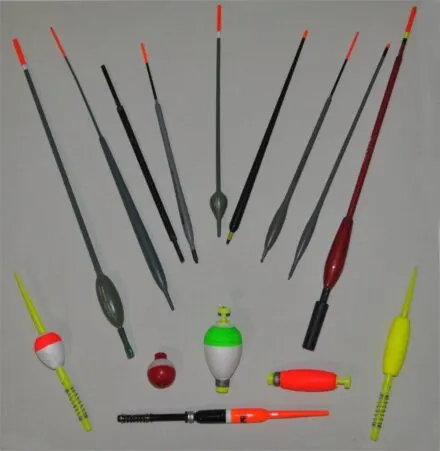
| Float and weight | Float technique: they hold the bait at a set depth. | The weight of the lead depends on the float. |
| Landing net | Landing the fish safely. | It reduces the need to lift the fish out onto the bank. |
| Measuring tape | Measuring the fish against the minimum size. | The minimum size is measured from the tip of the snout to the end of the longest rays of the tail fin (§ 11(1) of the decree). |
| Hook remover or pliers | Quick removal of the hook. | It shortens the handling of the fish. |
| Baits | Worms, corn, dough and others, depending on the water type. | In a trout district you may use ledger and float tackle only for fish other than salmonids and only with plant baits (Annex No. 7 to the decree). |
| Water, sun protection, plasters | Basic self-care. | By the water it can be both hot and cold, so dress in layers. |
- Documents, a pen and a cover
- Rod and reel
- Line and hooks
- Float and weight
- Baits
- Landing net
- Measuring tape
- Hook remover or pliers
- Water, sun protection, plasters



Three basic techniques
From the simplest to the most demanding
PracticeThe description of the techniques is from practice. The permitted methods by district type come from § 16 and § 17 and Annex No. 7 to Decree No. 197/2004 Coll.
Float
The bait is under the float at a set depth. It is the simplest way for still waters and for a beginner. In a non-trout district it is allowed all year, in a trout district only for fish other than salmonids and only with plant baits.
Bottom
The bait lies on the bottom, often with a weight, and the bite is shown by the bite alarm. At most 2 rods, and you must stay by the rod; self-hooking rigs are prohibited (§ 14(5) of the decree). In a trout district only for fish other than salmonids and only with plant baits.
Spinning
The artificial lure is actively worked through the water, 1 rod in the hand. In a non-trout district only 16 Jun – 31 Dec, in a trout district 16 Apr – 30 Nov with 1 artificial lure with 1 hook (Annex No. 7 to the decree).
Float
- Afloat on the surface
- Blead
- Ca hook with bait at a set depth
Bottom
- Aweight on the bottom
- Ba hook with bait on the bottom
Spinning
- Aartificial lure
- Bis worked through the water towards the bank


| Rule | Non-trout fishing district (§ 16) | Trout water (§ 17) |
|---|---|---|
| Number of rods | at most 2 (ledgering, float fishing); when spinning, deep-water spinning and fly fishing, 1 rod in the hand | at most 2 (ledgering, float fishing); when spinning and fly fishing, 1 rod in the hand |
| Permitted methods | ledgering, float fishing and fly fishing all year round; spinning, deep-water spinning and lift-net fishing (čeřínkování) only 16 Jun – 31 Dec | spinning and fly fishing 16 Apr – 30 Nov; ledgering and float fishing only for fish other than salmonids and only with plant bait |
| Close season for all fish | none | 1 Dec – 15 Apr |
First day at the water: checklist
From preparations at home to leaving the bank

You need: a fishing licence, a fishing permit, fishing gearTools: pen, measuring tape, landing net
Check your documents at home
Check that your fishing licence and permit are valid and that the permit covers the district you are going to, and take a pen for the entries. You must carry both documents when fishing (§ 13a of the Act).
Find out the rules of the fishing district
Find out the district type, close seasons, minimum size, daily limit and daily fishing hours. The conditions of a specific district are in the detailed conditions in the permit.
Read the signs at the water
At the water look for signs with bans, marked sections and district boundaries. What applies on a specific section can also be found in the detailed conditions in the permit.
Write down the date and the fishing district number
Before you start fishing, write the date and the district number in the permit in indelible form (§ 13c(4) of the Act, detailed conditions of ČRS and MRS).
Choose a spot and do not reserve it
Choose a spot with enough room and do not reserve it (§ 14(4) of the decree). Take care not to damage the vegetation and not to interfere with other anglers.
Prepare your gear and check the knot
Assemble the rod, spool the line, tie on the hook and, after tightening, load the knot. The procedure is in the guide Fishing knots.
Fishing, playing and landing the fish
When you get a bite, play the fish smoothly, net it and measure it with wet hands. Decide whether you may keep it (minimum size, protection period, daily limit).
After fishing, record your catches and clean up
Record carp, grass carp, predators and salmonids right after you keep them, other species by number and weight before leaving the water (§ 16(2) and § 17(3) of the decree). Take away all waste, including line.
Catch and release: what science says
A released fish is not always saved
StudyBartholomew and Bohnsack 2005: a review of 274 estimates from 53 studies. The median mortality of released fish was 11%, the mean 18%, the range 0 to 95%. Mortality was higher with deep hooking, with natural bait, when removing deeply swallowed hooks, with J-hooks, in warm water and with a long fight or handling.
Mortality of released fish in 274 estimates from 53 studies
Mortality was higher with
- a deeply swallowed hook
- natural bait
- removing deeply swallowed hooks
- J-hooks
- warm water
- prolonged fighting or handling
What follows for practice
- play the fish quickly
- do not lift it onto the bank unless you have to
- shorten the time out of the water
- if the hook is deeply swallowed, cut the line
In practice this means: play the fish quickly, do not haul it onto the bank unless you have to, minimise the time out of the water and, with a deeply swallowed hook, cut the line. In warm water the risk is higher.
Safety at the water
Tips from practice
PracticeThe safety tips are general and from practice. They were not the subject of our search in the studies.

Tell someone where you are going and when you will return
This applies especially when fishing alone and at water without a signal.
In a storm, stop fishing and go away from the water
A long rod over your head is a risk in lightning.
Do not enter deep or fast water without a life jacket
Depth and current are easy to underestimate. When fishing from a boat and when wading, a life jacket is a common precaution (advice from practice).
Look around when casting
A hook can injure a person. If a hook is stuck in the skin, do not pull it out by force and see a doctor.
Protect yourself from sun and heat
A hat, water and sunscreen.
Children at the water
Do not leave small children unattended at the water.
Consideration and ethics
Rules that are both law and good manners

Do not reserve a spot
You must not reserve a fishing spot (§ 14(4) of the decree). Keep at least 3 m from your neighbours when ledgering and float fishing and 20 m when spinning, unless you agree otherwise.
Take away all waste
Do not leave broken line, hooks and packaging by the water. Line can injure birds and other animals (advice from practice).
Respect the close season and size limit
The close season and the minimum size protect fish during spawning and growth. The overview is in the guide The fishing law.
Help beginners
An experienced angler is glad to advise if you ask politely. Ask the warden too if you are unsure about anything.
What next on the portal
The fishing district map, fish and further guides
Find a fishing district
On the fishing district map you will find the water type, the user and the conditions. The fishing rules change with the water type.
Get to know the fish
The fish catalogue with descriptions and pictures will help you.
Get your documents
The procedure, prices and exam are in the guide How to become an angler.
When something happens
Warden inspection, fish under the size limit, forgotten documents: What if….
Frequently asked questions
12 questions with short answers. Expand the one you are interested in.Questions12
What does a beginner need for fishing?
Documents first: a fishing licence from the office and a permit from the user of the fishing district (§ 13a of Act No. 99/2004 Coll.). Then simple gear: rod and reel, line, hooks, float and weights, landing net, measuring board, hook remover and baits.
The gear list comes from practice; a sensible list is higher up on this page.
Which technique is best to start with?
The simplest is usually float fishing on calm water in a non-trout district: the bait hangs under the float and you can see the bite. This is advice from practice, not from a study. In a non-trout district float fishing is allowed all year (Annex No. 7 to the decree).
How many rods may I have?
At most 2 rods (§ 13, para. 1 of the Act). When spinning, deep-water spinning or fly fishing, only 1 rod, held in the hand (Annex No. 7 to the Decree).
What baits should I use to start?
In a non-trout district beginners most often start with sweetcorn, worms or paste (practical advice). In a trout district you may use ledger and float tackle only with plant baits (Annex No. 7 to the decree), so read the detailed conditions of the district before fishing.
Where should I fish as a beginner?
Choose a fishing district you have a permit for and check its type and rules on the district map. For a start a non-trout district with still water is easier, where you can use float tackle. This is practical advice.
Is catch and release safe for fish?
Not entirely. A review of 53 studies (Bartholomew and Bohnsack 2005) gives a median mortality of released fish of 11%, a mean of 18% and a range of 0 to 95%. Mortality rose with deep hooking, warm water and a long fight or handling. The decree does not say whether you may continue catch and release in Czechia after reaching the daily limit.
How do I handle a fish I am releasing properly?
Play it quickly, net it and handle it for as short a time as possible, ideally above the water or in the water. Rather than pulling out a deeply swallowed hook, cut the line. The reasons are in the review of studies; the specific tips on holding the fish come from practice.
How to measure a fish?
It is measured from the tip of the snout to the end of the longest rays of the tail fin (§ 11(1) of Decree No. 197/2004 Coll.). Lay the fish on a flat surface or measure it on a measuring board, mouth closed and tail straight. The text gives no tolerance; release a fish that is just under the size.
May I fish at night?
The Decree does not deal with night fishing separately. In a non-trout fishing district you may fish between 4.00 and 24.00 from April to September, and between 5.00 and 22.00 from October to March (§ 12, para. 2). Fishing is prohibited outside these hours. Different hours would only apply on the basis of an exemption granted by the ministry (§ 13, para. 5 of the Act).
How much does it cost to start fishing?
A fishing licence costs CZK 200 for 30 days, CZK 500 for 10 years and CZK 1,000 indefinitely (item 14 of the Schedule of Administrative Fees). Plus a permit: a non-member can buy a short-term ČRS permit, for example from ÚS města Prahy for CZK 400 a day (2026). Equipment is a further expense, depending on your choice.
The detailed table is in the guide How to become an angler.
What should I do if a hook gets stuck in my finger?
Do not pull the hook out by force, especially if it has a barb, and stop fishing. If the hook is deeper, see a doctor. This is general safety advice from practice.
Can the fishery warden check me at the water?
Yes. The warden may check whether you are allowed to fish, your gear and catch, and ask for the licence, permit and an identity document (§ 16(1) of Act No. 99/2004 Coll.). Step by step it is in the guide What if….
No question was found for this search.
Related guides
Where to go next once you have read thisGuides3
- How to become an angler in CzechiaFishing licence, permit, exam and prices in Czechia for 2026, including for anglers from Slovakia.
- Fishing knotsHook, loops and line-to-line connections step by step: clinch, Uni, Palomar, Rapala, Albright, FG.
- How to cook boiliesMix, eggs, boiling and storage. And what we do not know about flavours.
Sources
Each source shows the level of evidence and the date we opened it.Sources7
- Act No. 99/2004 Coll., on fish-pond farming, the exercise of fishing rights, fishery wardens, the protection of marine fishery resources and amending certain acts (the Fisheries Act), wording effective 1 Jul 2025 Zákony pro lidi (AION CS), consolidated text. Opened 20 Nov 2026. Current wording effective 1 Jul 2025 (version 20); we found no newer one. Sections used: § 2(e), § 3, para. 2, § 4, para. 5, § 13, paras. 1 to 8, § 13a to 13c, § 14, § 16 and § 30.Regulation
- Decree No. 197/2004 Coll. implementing Act No. 99/2004 Coll. (the Fisheries Act), wording effective 1 Jul 2024 Zákony pro lidi (AION CS), consolidated text. Opened 20 Nov 2026. Current wording effective 1 Jul 2024 (version 13); we found no newer one. Sections used: § 8a (daily limit), § 10 and 10a (licence, qualification), § 11 (minimum sizes), § 12 (daily fishing hours), § 13 (close season), § 14 to 17 and Annex No. 7 (fishing methods).Regulation
- Rybářský řád a soupis pstruhových rybářských revírů s bližšími podmínkami výkonu rybářského práva pro rok 2026 a 2027 Český rybářský svaz, z. s. (ČRS), Republic Council (Republiková rada). Opened 20 Nov 2026. Valid from 1 Jan 2026 to 31 Dec 2027, approved on 4 Sep 2025. Used: the general part (compulsory equipment, fishing from a boat, marker buoys, children under 10, keepnets, returning the permit within 15 days, salmon protected all year round, protected species under Decree No. 395/1992 Coll., grass carp 50 cm) and examples from ÚS města Prahy and Středočeský ÚS. We have not read the sections of the other regional unions.Official source
- Bližší podmínky výkonu rybářského práva na vodách mimopstruhových (from 1 Jan 2026) Moravský rybářský svaz, z. s. (MRS), a copy on the website of the MRS Brno 1 branch association. Opened 20 Nov 2026. Approved by the 10th MRS Congress on 8 Jun 2025 and by the union committee; in force from 1 Jan 2026. Used: daily limit (1 fish of each predatory species and of carp, 2 in total; tench 3), minimum sizes (grass carp 50, carp 45, tench 25, eel 55 cm), grayling protected 1 Dec – 31 Jul, fishing from a boat, children aged 6 to 15, compulsory documents. The official website mrsbrno.cz would not open for us.Official source
- Bartholomew A., Bohnsack J. A. (2005): A review of catch-and-release angling mortality with implications for no-take reserves. Reviews in Fish Biology and Fisheries 15: 129–154 Springer. Opened 6 Nov 2026. A review of 274 estimates from 53 studies: median mortality 11%, mean 18%, range 0 to 95%. Mortality is higher with deep hooking, natural bait, removing deeply swallowed hooks, J-hooks, warm water and long fights or handling.Study
- Act No. 634/2004 Coll., on Administrative Fees, Schedule of Fees, item 14 (wording effective 1 Sep 2026) Zákony pro lidi (AION CS), consolidated text. Opened 20 Nov 2026. Fishing licence fee: 30 days CZK 200, 10 years CZK 500 (persons under 15, fisheries students and fisheries workers CZK 250), indefinite period CZK 1,000. The schedule still contains items for 1 and 3 years, but the Decree no longer provides for such licences.Regulation
- Povolenka k lovu 2026 Český rybářský svaz, z. s. (ČRS). Opened 20 Nov 2026. Union-wide annual permits for members (non-trout for adults CZK 3,400, trout CZK 3,650); the nationwide permit has not been issued since 2026; regional permits and permits for non-members by regional union; Republic Council fishing districts via the anglers' portal or from retailers.Official source