Catalogue
Animals and plants by the water – species catalogue
- Animals
- 42
- Plants
- 13
- Protected
- 21
- Hazards near the water
- 8
Wildlife by the water in brief
The catalogue lists 55 species an angler may come across by the water: 42 animals and 13 plants. 21 are protected, 11 are invasive and 8 call for caution. 7 species are commonly observed by the water this month. 55 of them have been recorded at fishing districts. None of this counts towards the fishing conditions score.
What you might see by the water now
Animals and plants whose season is under waySpecies in season7
Species people commonly observe by the water this month, starting with the most seasonal.
All animals and plants by the water
Search by name, filter by group and status, open the species pageAnimals42Plants13
 Eurasian beaverCastor fiberA herbivore that changes the stream and its banks with dams and burrows. It is protected. It creates shallows and pools where fish and insects thrive.1,609 fishing districtsmost in March
 Black storkCiconia nigraA shy forest bird that nests in old forests and goes to streams and wetlands to hunt fish and frogs.1,643 fishing districtsmost in May
 Giant hogweedHeracleum mantegazzianumAn invasive plant that grows along stream banks and on wet meadows. In sunlight its sap causes skin burns.1,496 fishing districtsmost in Jul
 Black-headed gullChroicocephalus ridibundusThe most common gull by the water. Nests in colonies at ponds and large reservoirs and also stays along rivers.1,643 fishing districtsmost in May
 in season nowWild boarSus scrofaIt comes to the water to wallow and drink, mainly at dusk and at night.1,602 fishing districtsmost in October
 Black alderAlnus glutinosaA riparian tree whose roots reach below the water surface.1,643 fishing districtsmost in Jul
 MallardAnas platyrhynchosThe most common duck; it nests by almost every water with bankside vegetation.1,643 fishing districtsmostly April
 Sheep tickIxodes ricinusTransmits tick-borne encephalitis and Lyme disease. It waits in tall grass and in the vegetation along banks.1,600 fishing districtsmostly April
 MosquitoesCulicidaeThey breed in standing water, so they are worst around reservoirs, oxbow lakes and floodplain forests, especially at sunset.1,400 fishing districtsmostly April
 Asian clamCorbicula flumineaAn Asian clam that is spreading along large rivers and is invasive.453 fishing districtsmost in August
 in season nowGreat cormorantPhalacrocorax carboA fish-eating bird. It nests at large reservoirs and in winter also stays on streams with open water.1,643 fishing districtsmost in December
 European pond turtleEmys orbicularisThe only native turtle of Central Europe. Lives in still and slow waters with a soft bottom.388 fishing districtsmost in May
 Pond sliderTrachemys scriptaA non-native turtle from America that got into the wild from pet keeping. It is invasive in Europe.965 fishing districtsmost in May
 Yellow flag irisIris pseudacorusA tall wetland plant with yellow flowers that grows on damp banks.1,643 fishing districtsmost in May
 Mute swanCygnus olorA large white waterbird that nests by slow waters, reservoirs and ponds with vegetation.1,643 fishing districtsmostly April
 White water lilyNymphaea albaAn aquatic plant with large white flowers and floating leaves. It grows in clean standing waters.1,532 fishing districtsmost in Jul
 Yellow water lilyNuphar luteaAn aquatic plant with yellow flowers and floating and submerged leaves. It grows in both standing and slow-flowing waters.1,468 fishing districtsmost in August
 Brown bearUrsus arctosIt lives in extensive mountain forests and appears elsewhere only rarely. It hunts fish and drinks at the water.108 fishing districtsmostly April
 RaccoonProcyon lotorA predator from North America that has spread to Europe and is invasive. Near water it hunts for frogs, fish, crayfish, bird eggs and molluscs.992 fishing districtsmost in August
 Daubenton's batMyotis daubentoniiAt dusk it flies just above the surface and hunts aquatic insects, mainly midges and mayflies.997 fishing districtsmost in Jul
 Himalayan balsamImpatiens glanduliferaAn invasive plant from the Himalayas, up to two metres tall, with pink flowers. It overgrows the banks of watercourses.1,632 fishing districtsmost in August
 American minkNeogale visonAn invasive predator from America. It hunts fish, birds and amphibians by the water and threatens native species.390 fishing districtsmost in Jul
 MuskratOndatra zibethicusA rodent from North America that swims well and feeds on bankside plants. It digs burrows into the banks.778 fishing districtsmost in Jun
 in season nowWhite-tailed eagleHaliaeetus albicillaA large bird of prey that hunts fish at large reservoirs and rivers. In winter it gathers at water that does not freeze.1,643 fishing districtsmostly April
 HorsefliesTabanidaeLarge biting flies. They are most active on hot, windless days near water and on meadows.1,642 fishing districtsmost in Jul
 BulrushTypha latifoliaA wetland plant with a brown cylindrical fruiting spike.1,643 fishing districtsmost in Jul
 Eurasian water shrewNeomys fodiensA small insectivore, an excellent swimmer and diver. It hunts aquatic invertebrates, young frogs and small fish.422 fishing districtsmost in August
 MayfliesEphemeropteraAn insect with aquatic larvae. Adults live only briefly and hatch all at once in swarms.1,549 fishing districtsmost in Jun
 Japanese knotweedReynoutria japonicaAn invasive herb from East Asia that forms dense stands up to three metres tall.1,643 fishing districtsmost in September
 StonefliesPlecopteraInsects whose larvae live in clean, cold, well-oxygenated streams.1,044 fishing districtsmost in May
 Great crested grebePodiceps cristatusA diving waterbird with a crest on its head. Hunts small fish and insects, nests on a floating nest in the reeds.1,643 fishing districtsmostly April
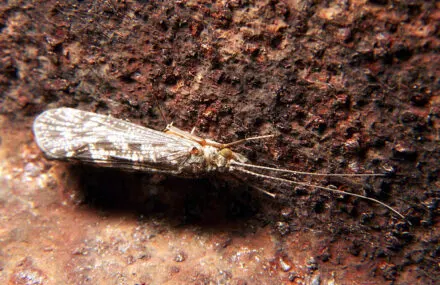 CaddisfliesTrichopteraInsects whose larvae, in many species, build protective cases from pebbles, sand or plants.1,591 fishing districtsmost in Jul
 Raccoon dogNyctereutes procyonoidesA canid from East Asia that has spread across Europe and is invasive. Near water it hunts for frogs, fish, bird eggs and molluscs.938 fishing districtsmost in August
 Noble crayfishAstacus astacusA native crayfish of clean streams and reservoirs. It is rare and endangered by crayfish plague and invasive crayfish.1,338 fishing districtsmost in August
 Signal crayfishPacifastacus leniusculusA North American crayfish that is invasive. It carries crayfish plague, which destroys native crayfish.386 fishing districtsmost in August
 Curled pondweedPotamogeton crispusA submerged plant with wavy leaves. Grows in still and flowing waters.1,622 fishing districtsmost in Jul
 Common toadBufo bufoThe largest native toad. In spring it migrates to water, where it breeds.1,643 fishing districtsmostly April
 HornwortCeratophyllum demersumA submerged plant without roots that floats in the water.1,518 fishing districtsmost in August
 in season nowCommon kingfisherAlcedo atthisA small bird that dives for little fish. It nests in steep banks of clean streams.1,643 fishing districtsmost in October
 Eurasian lynxLynx lynxA hidden forest predator. It comes to the water for prey. Attacks on people are not known; an encounter is very unlikely.319 fishing districtsmost in March
 Fire salamanderSalamandra salamandraBlack with yellow spots. Lives in deciduous forests by clean mountain streams; the larvae develop in the stream.1,347 fishing districtsmost in October
 Duck musselAnodonta anatinaA large freshwater mussel that lives buried in the mud and sand of ponds and slow-flowing streams.1,131 fishing districtsmost in October
 Green frogs (water frogs)PelophylaxA group of green frogs that sit by the bank and jump into the water when disturbed.1,573 fishing districtsmost in May
 Zebra musselDreissena polymorphaA small mussel that attaches itself to stones and other solid objects. It is invasive and comes from the Black Sea region.758 fishing districtsmost in September
 Common reedPhragmites australisTall grass that forms extensive reed beds around ponds and on banks.1,643 fishing districtsmost in August
 Grass snakeNatrix natrixA harmless snake with two yellow spots on the nape. It swims well and hunts frogs, fish and newts.1,643 fishing districtsmost in May
 DragonfliesOdonataPredatory insect. The larvae live underwater for several months to years; adult dragonflies hunt in the air above the water.1,643 fishing districtsmost in Jul
 Grey wolfCanis lupusA shy predator of the forests. It comes to the water at night and at dusk.716 fishing districtsmost in September
 White-throated dipperCinclus cinclusA small bird that dives and runs along the bed of rapids after insect larvae. Nests by clean mountain streams.1,614 fishing districtsmost in May
 in season nowGreat egretArdea albaA large white heron that hunts fish and frogs in the shallows. Its numbers are increasing in Central Europe, and in winter it can also be seen along rivers.1,643 fishing districtsmost in September
 in season nowGrey heronArdea cinereaIt stands in the shallows and lies in wait for small fish. It is easy to see along the banks of ponds and slow streams.1,643 fishing districtsmost in May
 White willowSalix albaA tree on the banks of rivers and ponds. Its branches shade the water and its roots hold the bank.1,643 fishing districtsmost in Jul
 AdderVipera berusA venomous snake that basks on rocky slopes, in wetlands and at forest edges near water.1,196 fishing districtsmost in May
 in season nowEurasian otterLutra lutraIt hunts fish, crayfish and frogs. It is strictly protected, and its presence is considered a sign of fairly clean water with plenty of fish.1,536 fishing districtsmost in October
 Common duckweedLemna minorA tiny floating plant that can cover the whole surface of standing water.1,643 fishing districtsmost in August
No species was found for this search.
What to watch out for by the water
Species that can harm an angler and how to avoid themSpecies8
Bear, wolf, wild boar, adder, ticks, mosquitoes, horseflies and giant hogweed: species an angler may meet by the water. The species page says where it occurs and how to protect yourself.
- Giant hogweedHeracleum mantegazzianum
- in season nowWild boarSus scrofa
- Sheep tickIxodes ricinus
- MosquitoesCulicidae
- Brown bearUrsus arctos
- HorsefliesTabanidae
- Grey wolfCanis lupus
- AdderVipera berus
More on the blog: Ticks, adders and giant hogweed: what to watch out for by the water
Protected species by the water
Animals and plants protected by the nature conservation actSpecies21
Do not disturb or feed protected species, and do not take apart their nests, burrows or shelters. Behave by the water so as not to scare them away.
- Eurasian beaver
- Black stork
- Black-headed gull
- European pond turtle
- Mute swan
- Brown bear
- Daubenton's bat
- White-tailed eagle
- Great crested grebe
- Noble crayfish
- Common toad
- Common kingfisher
- Eurasian lynx
- Fire salamander
- Green frogs (water frogs)
- Grass snake
- White-throated dipper
- Great egret
- Grey heron
- Adder
- Eurasian otter
Invasive species by the water
Non-native animals and plants spreading along watersSpecies11
Non-native species spreading at the expense of native wildlife. You can report a sighting to the site manager or to an observation database.
- Giant hogweedHeracleum mantegazzianum
- Asian clamCorbicula fluminea
- Pond sliderTrachemys scripta
- RaccoonProcyon lotor
- Himalayan balsamImpatiens glandulifera
- American minkNeogale vison
- MuskratOndatra zibethicus
- Japanese knotweedReynoutria japonica
- Raccoon dogNyctereutes procyonoides
- Signal crayfishPacifastacus leniusculus
- Zebra musselDreissena polymorpha
Where the data come from
What occurrence and season mean and what they do not say
The occurrence is based on observations in the GBIF database. It shows where people have recorded the species, not where it is certain to be or how many there are. The advice is general and does not replace the instructions of a doctor, rescuers, the area manager or the fishing regulations.
Photo credits
- Wild boar: Photo: Valentin Panzirsch, CC BY-SA 3.0 at, Wikimedia Commons
- Great cormorant: Photo: MPF, CC BY-SA 4.0, Wikimedia Commons
- Eurasian otter: Photo: Bernard Landgraf, CC BY-SA 3.0, Wikimedia Commons
- Great egret: Photo: Chuck Homler (FocusOnWildlife.Me), CC BY-SA 4.0, Wikimedia Commons
- Common kingfisher: Photo: Tony Wood, CC BY 2.0, Wikimedia Commons
- White-tailed eagle: Photo: Bengt Nyman from Vaxholm, Sweden, CC BY-SA 2.0, Wikimedia Commons
- Grey heron: Photo: Giacomo Cimino (foto.giacomocimino.workers.dev · @giacomociminoph), CC BY-SA 4.0, Wikimedia Commons
- Eurasian beaver: Photo: Per Harald Olsen, CC BY-SA 3.0, Wikimedia Commons
- Black stork: Photo: Chris Eason, CC BY 2.0, Wikimedia Commons
- Giant hogweed: Photo: Lucas Kendall, CC BY-SA 4.0, Wikimedia Commons
- Black-headed gull: Photo: Hans Hillewaert, CC BY-SA 3.0, Wikimedia Commons
- Black alder: Photo: AnRo0002, CC0, Wikimedia Commons
- Mallard: Photo: This picture was realized by Richard Bartz by using a Canon EF 70-300mm f/4-5.6 IS USM…, CC BY-SA 2.5, Wikimedia Commons
- Sheep tick: Photo: W.alter, CC BY-SA 4.0, Wikimedia Commons
- Mosquitoes: Photo: Katja Schulz from Washington, D. C., USA, CC BY 2.0, Wikimedia Commons
- Asian clam: Photo: Ryan Hodnett, CC BY-SA 4.0, Wikimedia Commons
- European pond turtle: Photo: Christian Ursilva from København, Danmark, CC BY-SA 4.0, Wikimedia Commons
- Pond slider: Photo: Happyswissman, CC BY 3.0, Wikimedia Commons
- Yellow flag iris: Photo: Myrabella, CC BY-SA 3.0, Wikimedia Commons
- Mute swan: Photo: Sanchezn, CC BY-SA 3.0, Wikimedia Commons
- White water lily: Photo: Jacek Halicki, CC BY-SA 4.0, Wikimedia Commons
- Yellow water lily: Photo: author not stated, CC BY-SA 2.0 de, Wikimedia Commons
- Brown bear: Photo: Yathin S Krishnappa, CC BY-SA 3.0, Wikimedia Commons
- Raccoon: Photo: Rhododendrites, CC BY-SA 4.0, Wikimedia Commons
- Daubenton's bat: Photo: Gilles San Martin from Namur, Belgium, CC BY-SA 2.0, Wikimedia Commons
- Himalayan balsam: Photo: H. Zell, CC BY-SA 3.0, Wikimedia Commons
- American mink: Photo: Needsmoreritalin, CC BY-SA 3.0, Wikimedia Commons
- Muskrat: Photo: D. Gordon E. Robertson, CC BY-SA 3.0, Wikimedia Commons
- Horseflies: Photo: Bruce Marlin, CC BY-SA 2.5, Wikimedia Commons
- Bulrush: Photo: Peter O'Connor aka anemoneprojectors from Stevenage, United Kingdom, CC BY-SA 2.0, Wikimedia Commons
- Eurasian water shrew: Photo: Accipiter (R. Altenkamp, Berlin), CC BY-SA 3.0, Wikimedia Commons
- Mayflies: Photo: Richard Bartz, Munich aka Makro Freak Image:MFB.jpg, CC BY-SA 2.5, Wikimedia Commons
- Japanese knotweed: Photo: W.carter, CC0, Wikimedia Commons
- Stoneflies: Photo: JJ Harrison (https://www.jjharrison.com.au/), CC BY-SA 3.0, Wikimedia Commons
- Great crested grebe: Photo: JJ Harrison (https://www.jjharrison.com.au/), CC BY-SA 3.0, Wikimedia Commons
- Caddisflies: Photo: Bruce Marlin, CC BY-SA 2.5, Wikimedia Commons
- Raccoon dog: Photo: Ryzhkov Sergey, CC BY-SA 4.0, Wikimedia Commons
- Noble crayfish: Photo: Dragon187, CC BY-SA 3.0, Wikimedia Commons
- Signal crayfish: Photo: Astacoides, CC BY-SA 3.0, Wikimedia Commons
- Curled pondweed: Photo: author not stated, CC BY-SA 3.0, Wikimedia Commons
- Common toad: Photo: Tythatguy1312, CC BY-SA 4.0, Wikimedia Commons
- Hornwort: Photo: Bernd Haynold, CC BY-SA 3.0, Wikimedia Commons
- Eurasian lynx: Photo: Aconcagua (talk), CC BY-SA 3.0, Wikimedia Commons
- Fire salamander: Photo: Didier Descouens, CC BY-SA 4.0, Wikimedia Commons
- Duck mussel: Photo: User:Weitbrecht, CC BY-SA 3.0, Wikimedia Commons
- Green frogs (water frogs): Photo: Charles J. Sharp, CC BY-SA 4.0, Wikimedia Commons
- Zebra mussel: Photo: Smithsonian Environmental Research Center, CC BY 2.0, Wikimedia Commons
- Common reed: Photo: W.carter, CC0, Wikimedia Commons
- Grass snake: Photo: Charles J. Sharp, CC BY-SA 4.0, Wikimedia Commons
- Dragonflies: Photo: Paul Balfe, CC BY 2.0, Wikimedia Commons
- Grey wolf: Photo: User:Mas3cf, CC BY-SA 4.0, Wikimedia Commons
- White-throated dipper: Photo: Mark Medcalf, CC BY 2.0, Wikimedia Commons
- White willow: Photo: MPF, CC BY-SA 3.0, Wikimedia Commons
- Adder: Photo: Charles J. Sharp, CC BY-SA 4.0, Wikimedia Commons
- Common duckweed: Photo: author not stated, CC BY-SA 3.0, Wikimedia Commons