Fish, carp family
Ide
- Maximum length
- 100cm
- Maximum weight
- 4.0kg
- Best water temperature
- 10–22 °C
- Water today (3.3 °C)
- Tolerates it, but slowed down
- Fishing districts near where it occurs
- 11

Ide: the species and fishing rules
About the species Ide
Length up to100 cmWeight up to4,0 kg
How to recognise it
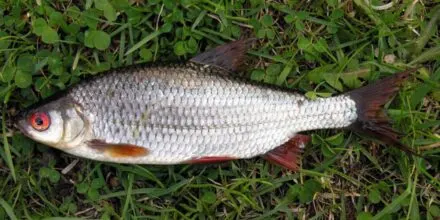
Sturdy body with a dark back, silver sides, smaller scales than the chub and orange-red fins, especially the pelvic and anal fins.
Where it lives
Large lowland rivers, side arms and reservoirs; in summer in shoals near the surface, in winter in deep holes.
What it feeds on
Insects, worms, molluscs, plant food and young fish.
Spawning
From March to May; it lays its eggs on gravel or plants in flowing places.
It is caught on float, feeder and on fly. You can tell it from the chub by its darker back, smaller scales and orange fins.
Close season, minimum size and daily limit
What the Fisheries Act says about ide. For guidance only; check it in the fishing regulations of the fishing district.Minimum size25 cm
Species protected all year
Annex III to Decree No. 395/1992 Coll.; § 15, para. 1(c) of Decree No. 197/2004 Coll.fishing prohibited
this species may not be fishedoutside this period
Protection period
- 16 Mar – 15 Jun in non-trout fishing districts (a protected species under Decree No. 395/1992 Coll., see protected all year round) § 13, para. 3 of Decree No. 197/2004 Coll.
this species may not be fishedoutside this period
Minimum size
§ 11, paras. 2 and 3 of Decree No. 197/2004 Coll.25 cm
below the minimum size: return it to the waterat or above the minimum size: you may keep it
Daily limit
§ 8a, paras. 1, 3 and 5 of Decree No. 197/2004 Coll.- 7kgAll species combinedweight of the whole daily catch; Prussian carp (karas stříbřitý), gobies (Gobiidae), North American catfish (Ictaluridae) and invasive species on the EU list do not count
Summary of the regulations (Act No. 99/2004 Coll. and Decree No. 197/2004 Coll.). It may be out of date or contain an error. The permit and the fishing regulations of the fishing district are binding. The fishing law, rule by rule.
Water, occurrence and catches
Water temperature and requirements
At what temperature the species is active and how well today's water suits it.Best temperature10–22 °CWater today3,3 °C
Tolerates it, but slowed downTypical water in Czechia is 3.3 °C today. The species tolerates this temperature (2 to 26 °C), but the water is colder than the ideal 10 to 22 °C. Fish tend to be slower and pickier.
- tolerates 2 to 26 °C
- best 10 to 22 °C
- spawning at 8 to 14 °C
- typical water today 3.3 °C
- Length
- up to 100 cm
- Weight
- up to 4.0 kg
- Oxygen
- Typical oxygen requirements
- Position in the food chain
- 3.8omnivore and small animals
The values are indicative and come from the FishBase database. In a particular water, fish behave according to the weather, air pressure, oxygen and food.
Data source: FishBase (Froese & Pauly, Eds.), www.fishbase.se, version 06/2026, licence CC BY-NC.
Where it was recorded
Fishing districts around which a record of this species exists (GBIF).Fishing districts11Basins1
Occurrence by river basin
- Elbe basin11from 1,079
Number of fishing districts with a record of the species and the number of all fishing districts in the basin.
By water type
- Non-trout fishing districts11100%
The water type determines the close season and the fishing rules of the fishing district.
Fishing districts with a record
- Labe 1
- Labe 9
- Ohře 1
- Jizera 7
- Vltava 4 (h)
- Mrlina 1
- Žehrovka 1
- Labe 21
- Labe 21 A – tůně a nádrže
- Metuje 1
- Labe 33
11 fishing districts in total. Show on map
Catches of Ide
Approved catches by anglers on this portal.
Nobody has logged a catch of this species yet. Be the first; once approved it will appear here and on the leaderboard.

In the kitchen and in Europe
Fish in the kitchen
How it tastes, whether it has small bones and how it is cooked.
Flesh
The flesh is bony and valued less.
Cooking
- Frying
- Smoking
Fried after close scoring, or smoked.
Small bones
Has small bonesTrade names in the EU
The names under which this species is sold in other EU countries.Countries6
- SlovakiaJalec tmavý
- CzechiaJelec jesen
- AustriaAlandNerfling
- Hungaryjászkeszegjász
- PolandJaź
- GermanyOrfeAland
- RomaniaVăduviţă
Source: European Commission, commercial designations of fishery and aquaculture products. The names apply when the fish is sold in that country.
Frequently asked questions
Short answers from the data on this page.Questions6
Where does the ide live?
Large lowland rivers, side arms and reservoirs; in summer in shoals near the surface, in winter in deep holes.
What does the ide eat?
Insects, worms, molluscs, plant food and young fish.
When does the ide spawn?
From March to May; it lays its eggs on gravel or plants in flowing places.
What water temperature does the ide need?
It does best in water at 10 to 22 °C.
Does the ide have small bones?
It has small Y-shaped bones that are not removed by filleting.
How is the ide cooked?
Fried after close scoring, or smoked.
Photo credits
- Ide: Photo: Viridiflavus, CC BY-SA 3.0, Wikimedia Commons
- Chub: Photo: Karelj, Public domain, Wikimedia Commons
- Roach: Photo: Scardinius_erythropthalmus1_resize.jpg: Original uploader was Algirdas at lt.wikipedia…, CC BY-SA 3.0, Wikimedia Commons
Minimum sizes, protection periods and permitted fishing methods are set by the fishing regulations and the conditions of the specific fishing district. Check them before you fish.