Fish, carp family
Common bream
- Maximum length
- 82cm
- Maximum weight
- 6.0kg
- Best water temperature
- 14–24 °C
- Water today (2.7 °C)
- Out of range
- Fishing districts near where it occurs
- 81

Common bream: the species and fishing rules
About the species Common bream
Length up to82 cmWeight up to6,0 kg
How to recognise it
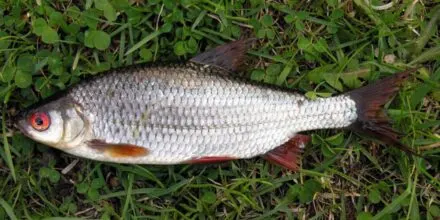
Tall compressed body, long anal fin and silver to bronze colouring with darker fins.
Where it lives
Lowland rivers and reservoirs, in shoals near deeper stretches.
What it feeds on
Insect larvae, plankton, plants.
Spawning
From April to June in overgrown shallows.
An abundant species. Large shoals can be fed with groundbait and fished on the bottom.
Close season, minimum size and daily limit
What the Fisheries Act says about common bream. For guidance only; check it in the fishing regulations of the fishing district.
Daily limit
§ 8a, paras. 1, 3 and 5 of Decree No. 197/2004 Coll.- 7kgAll species combinedweight of the whole daily catch; Prussian carp (karas stříbřitý), gobies (Gobiidae), North American catfish (Ictaluridae) and invasive species on the EU list do not count
Summary of the regulations (Act No. 99/2004 Coll. and Decree No. 197/2004 Coll.). It may be out of date or contain an error. The permit and the fishing regulations of the fishing district are binding. The fishing law, rule by rule.
Water, occurrence and catches
Water temperature and requirements
At what temperature the species is active and how well today's water suits it.Best temperature14–24 °CWater today2,7 °C
Out of rangeTypical water in Czechia is 2.7 °C today. That is outside the range the species tolerates (3 to 30 °C). Fish are less active or move to water with a more suitable temperature.
- tolerates 3 to 30 °C
- best 14 to 24 °C
- spawning at 12 to 20 °C
- typical water today 2.7 °C
- Length
- up to 82 cm
- Weight
- up to 6.0 kg
- Oxygen
- Typical oxygen requirements
- Position in the food chain
- 3.1omnivore and small animals
The values are indicative and come from the FishBase database. In a particular water, fish behave according to the weather, air pressure, oxygen and food.
Data source: FishBase (Froese & Pauly, Eds.), www.fishbase.se, version 06/2026, licence CC BY-NC.
Where it was recorded
Fishing districts around which a record of this species exists (GBIF).Fishing districts81Basins3
Occurrence by river basin
- Elbe basin50from 1,079
- Danube basin27from 463
- Oder basin4from 230
Number of fishing districts with a record of the species and the number of all fishing districts in the basin.
By water type
- Non-trout fishing districts7289%
- Trout fishing districts911%
The water type determines the close season and the fishing rules of the fishing district.
Fishing districts with a record
- Labe 1
- Morava 13
- Dyje 4M
- Morava 13A
- Morava 18
- Olomoucké Štěrkovny 1 a
- Olomoucké Štěrkovny 1 B
- Botič 1
- Labe 9
- Odra 1
- Ohře 1
- Orlovský potok 1 a
- Vltava 30 – 32, údolní nádrž Lipno
- Jizera 7
- Vltava 4 (h)
- Dyje 2
- Dyje 3A
- Dyje 3
- Sázava 13
- Sázava 14
- Vltava 5 (h)
- Kyjovka 2D
- Morava 2
- Morava 3
- Blanice Vodňanská 3
- Vltava 6 (h)
- Bečva 1
- Chrudimka 7
- Chrudimka 7 P
- Cidlina 4
- Cidlina 5
- Dračice 1
- Moštěnka 1
- Mrlina 1
- Vltava 2
- Vltava 2 a – tůně
81 fishing districts in total, 36 shown. Show on map
Catches of Common bream
Approved catches by anglers on this portal.
Nobody has logged a catch of this species yet. Be the first; once approved it will appear here and on the leaderboard.

In the kitchen and in Europe
Fish in the kitchen
How it tastes, whether it has small bones and how it is cooked.
Flesh
The flesh is tasty but has many small bones.
Cooking
- Smoking
- Frying
Smoked, or fried after very close scoring.
Small bones
Has small bonesTrade names in the EU
The names under which this species is sold in other EU countries.Countries8
- SlovakiaPleskáč vysoký
- CzechiaCejn velký
- AustriaBleiBrachsen
- Hungarydévérkeszegkeszeg
- PolandLeszcz
- GermanyBrasseBlei
- RomaniaPlătică
- ItalyAbramide
- Francebrème
Source: European Commission, commercial designations of fishery and aquaculture products. The names apply when the fish is sold in that country.
Frequently asked questions
Short answers from the data on this page.Questions6
Where does the common bream live?
Lowland rivers and reservoirs, in shoals near deeper stretches.
What does the common bream eat?
Insect larvae, plankton, plants.
When does the common bream spawn?
From April to June in overgrown shallows.
What water temperature does the common bream need?
It does best in water at 14 to 24 °C.
Does the common bream have small bones?
It has small Y-shaped bones that are not removed by filleting.
How is the common bream cooked?
Smoked, or fried after very close scoring.
Photo credits
- Common bream: Photo: Микова Наталия, Public domain, Wikimedia Commons
- Roach: Photo: Scardinius_erythropthalmus1_resize.jpg: Original uploader was Algirdas at lt.wikipedia…, CC BY-SA 3.0, Wikimedia Commons
- Silver bream: Photo: author not stated, CC BY-SA 3.0, Wikimedia Commons
Minimum sizes, protection periods and permitted fishing methods are set by the fishing regulations and the conditions of the specific fishing district. Check them before you fish.